


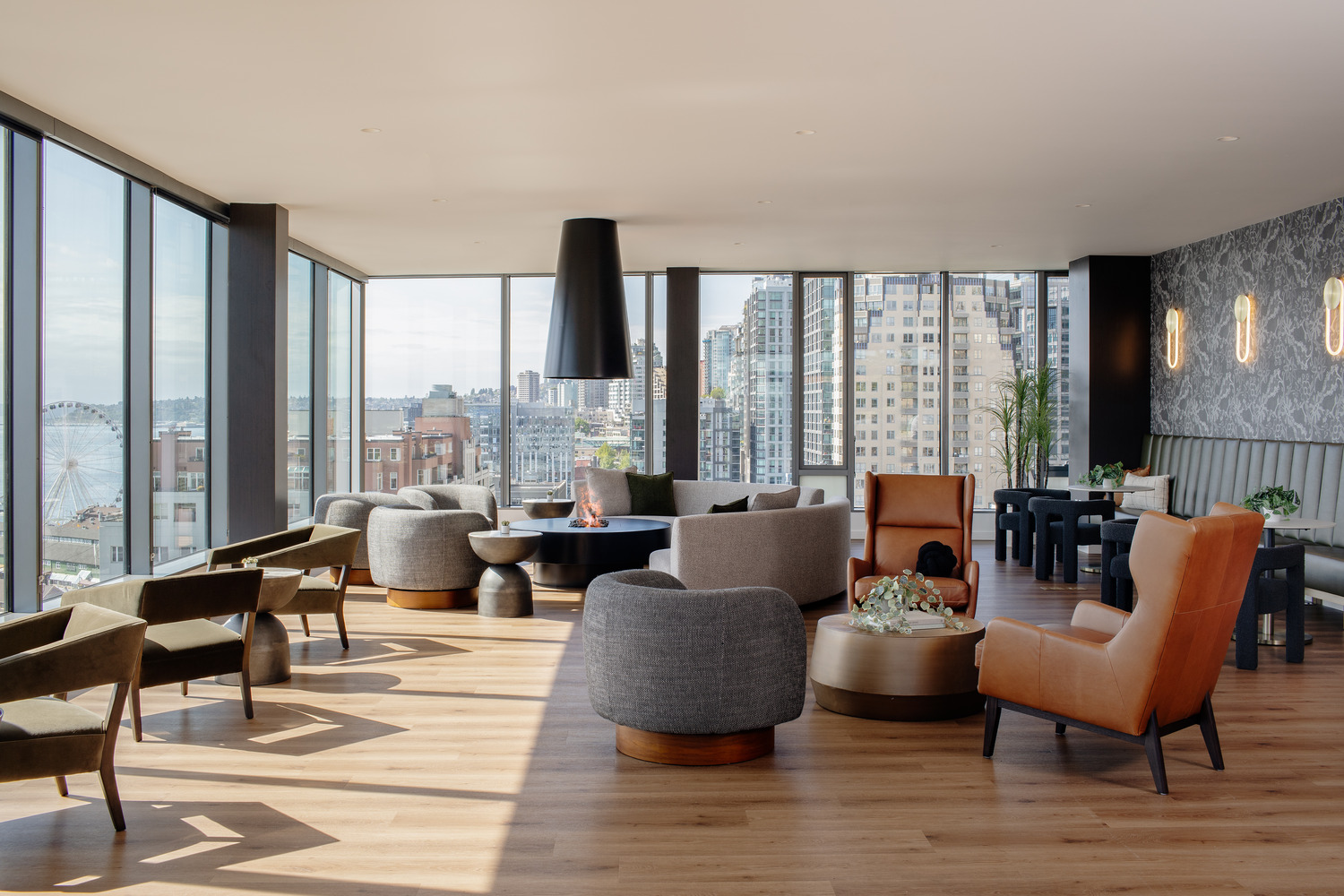
At Ankrom Moisan, our interior designers and architects bring both depth and breadth of experience to every project. That expertise allows us to support our clients throughout the full life of their buildings—from early programming and ground-up design through renovations and tenant improvements years later.
Because we know our buildings inside and out, we’re uniquely positioned to return as trusted partners when our clients’ needs evolve. Our architects often lead the initialground-up design, establishing the vision, systems, and structure. As the building matures and programs shift, our interior designers step forward to lead renovation work, ensuring the space continues to function beautifully for the people who use it.
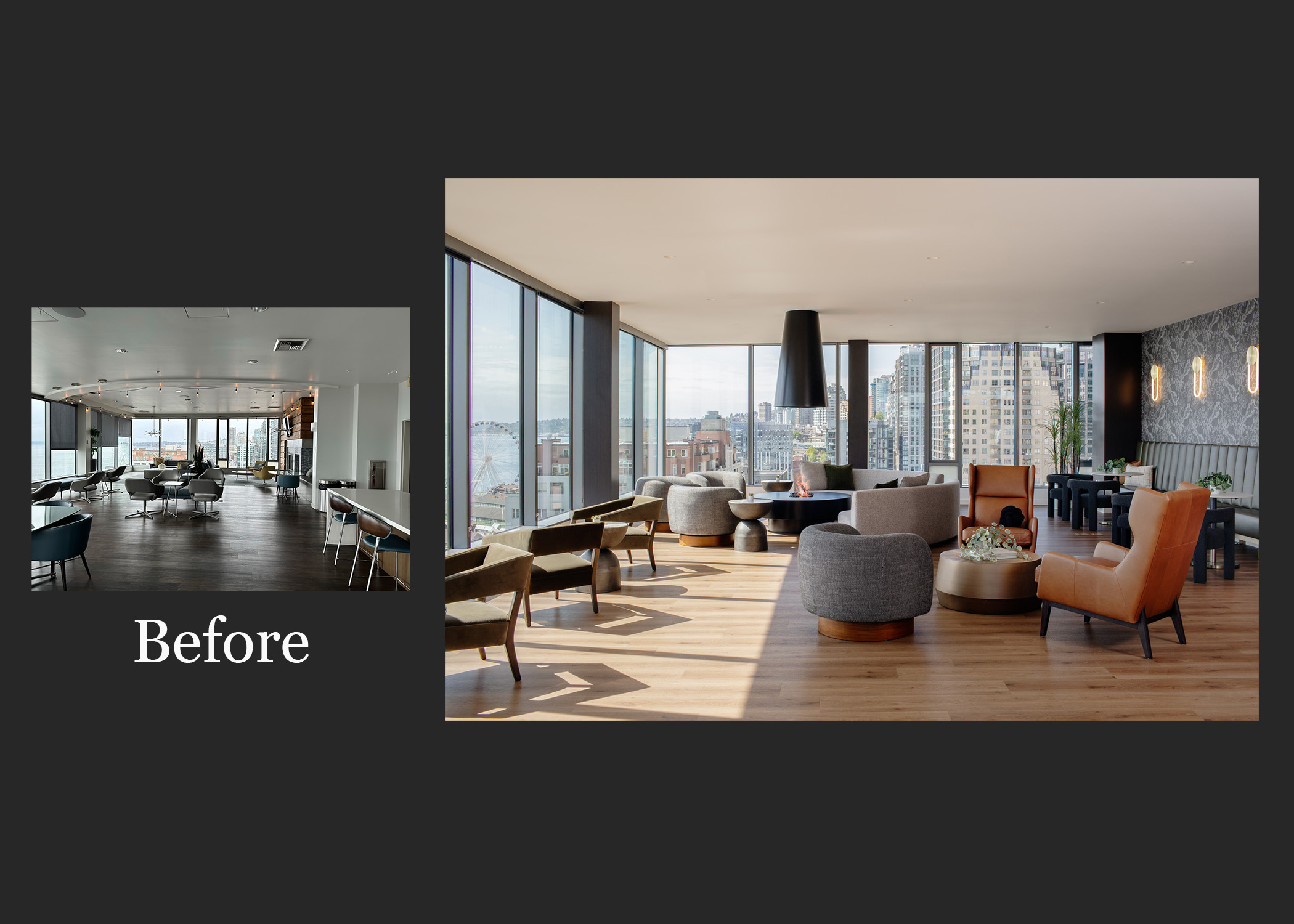
Griffis Seattle Waterfront
Across all studios, this collaborative model enables us to design not just buildings, but the entire lifespan of the environments our clients rely on.
In 2016, Ankrom Moisan partnered with Central City Concern to design the Blackburn Center, which opened in 2019. From the beginning, the team worked closely with CCC to create a welcoming, stigma-free entry experience that avoided the institutional feel common in healthcare settings.
About six months after opening, CCC reached out again — this time to explore adding a security room that could enhance safety while preserving the building’s warmth and approachability. Because we knew the building intimately and maintained strong relationships with CCC’s facilities team, we were able to respond quickly, re-engage original engineers and consultants, and deliver a coordinated tenant improvement solution within just a few months.
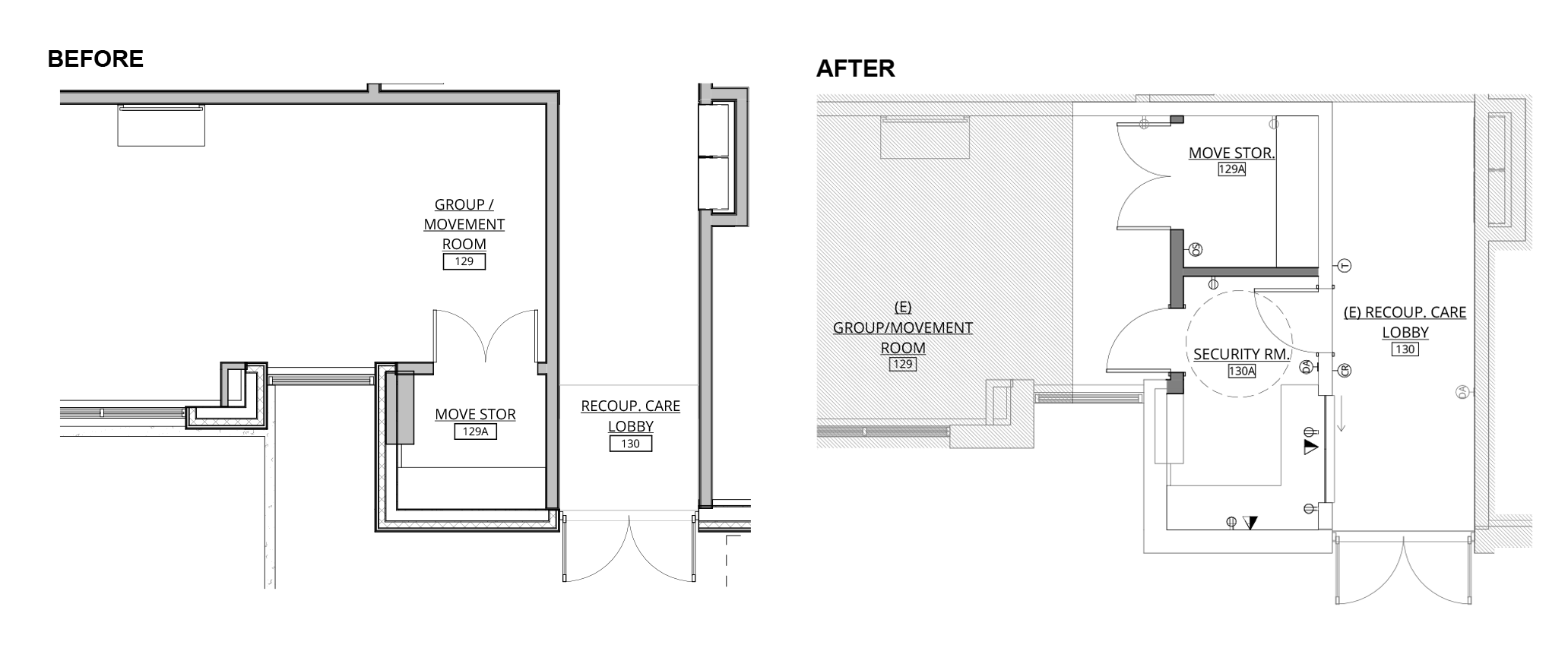
Site plans from before and after CCC Blackburn Center’s hallway renovation
This project is a clear example of designing for the life of a building. As needs, leadership, and programs evolve, we remain a trusted partner ready to adapt spaces that support our clients and the communities they serve.
Our relationship with Trinity Terrace campus began in 2003. We served as the stamping architect for the Phase 2 City Tower, which opened in 2007, and our studio later collaborated with Mariah Kiersey to design the Phase 3 River Tower—a full CCRC with Skilled Nursing, Memory Care, Assisted Living, Dining, and Independent Living.
After River Tower opened, the AM team was invited back to refresh the common spaces connecting the original Phase 1 Terrace Tower and Phase 2 City Tower, aligning them with the design language of the new Phase 3 tower. We also updated the existing kitchen, dining areas, several amenities, and continued our collaboration with the Healthcare studio on the skilled nursing renovation.
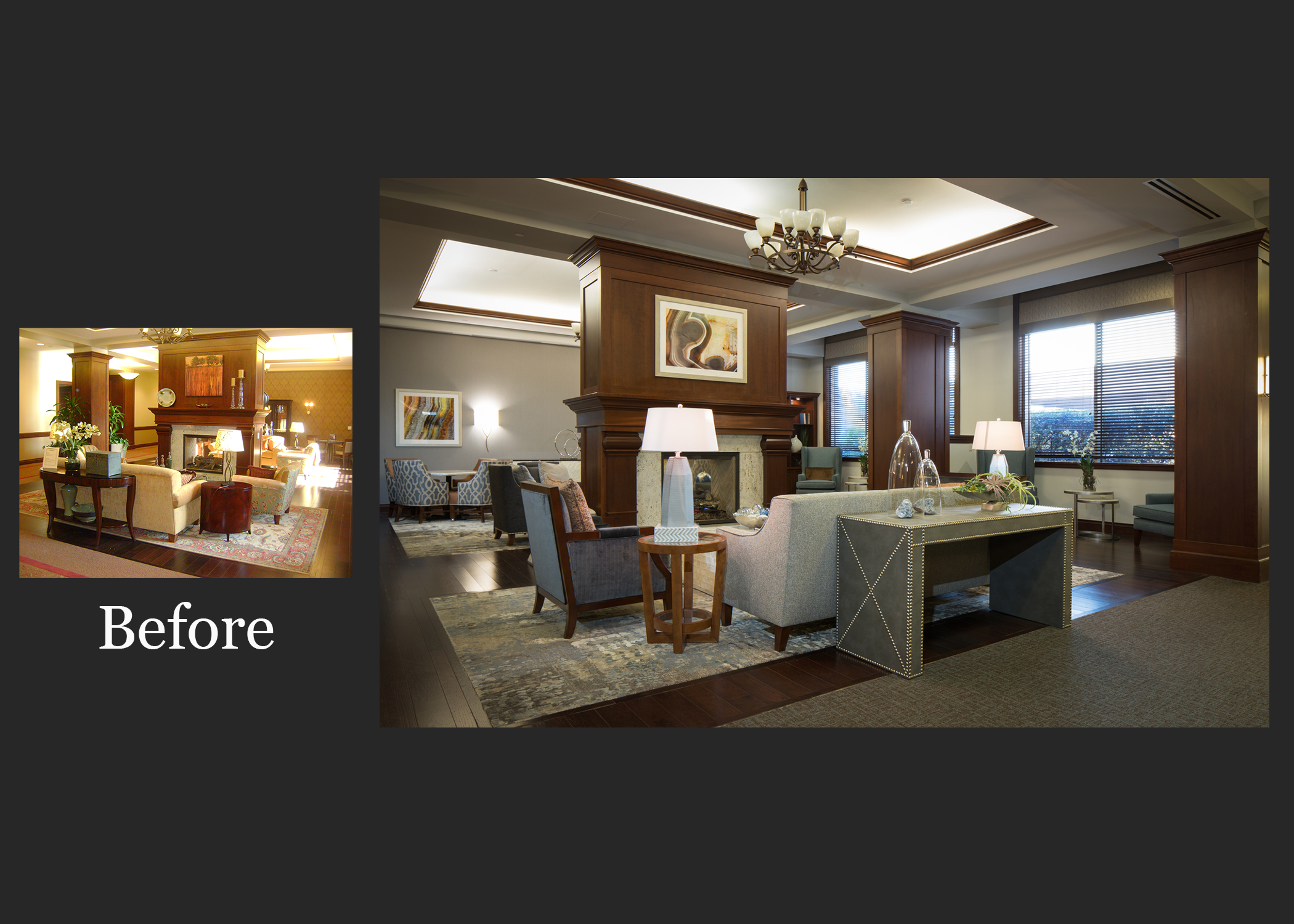
River Tower
Because we knew the building’s systems and structure, we were able to re-engage many of the original consultants and streamline the renovation process. That continuity led to a more efficient design schedule and a smoother experience for the client.
Great buildings don’t stand still—they evolve.
We believe the most successful workplaces are those that adapt over time, staying relevant as organizations grow, shift, and reimagine how they work.
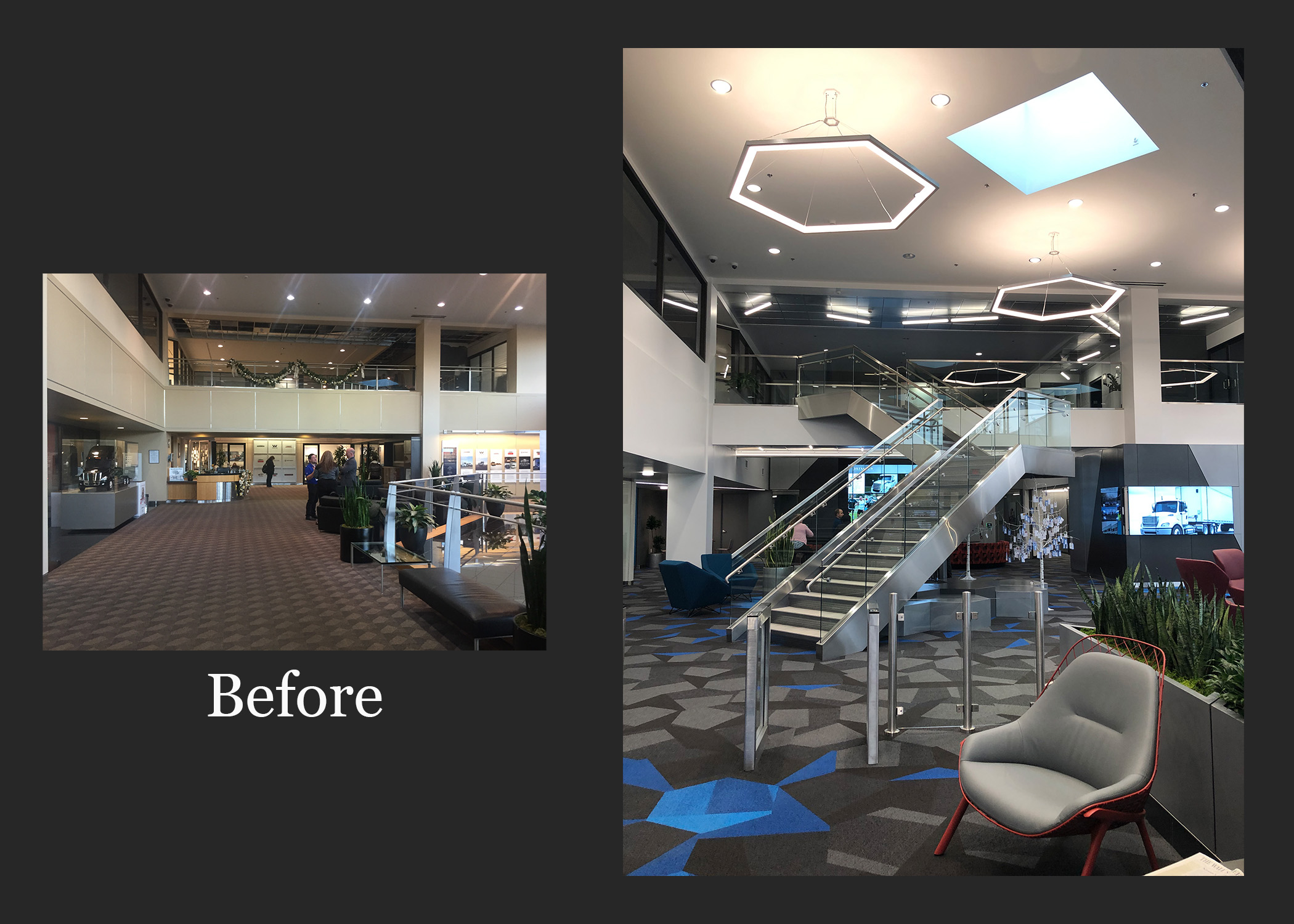
In 2016, our Office Studio designed the Daimler Headquarters campus. Nearly a decade later, we continue to partner with Daimler on targeted tenant improvements and security enhancements that respond to evolving business needs.
Because we know this campus inside and out, our renovation work is faster, more strategic, and deeply rooted in the original design intent—delivering high-impact updates with minimal disruption.
Daimler Headquarters
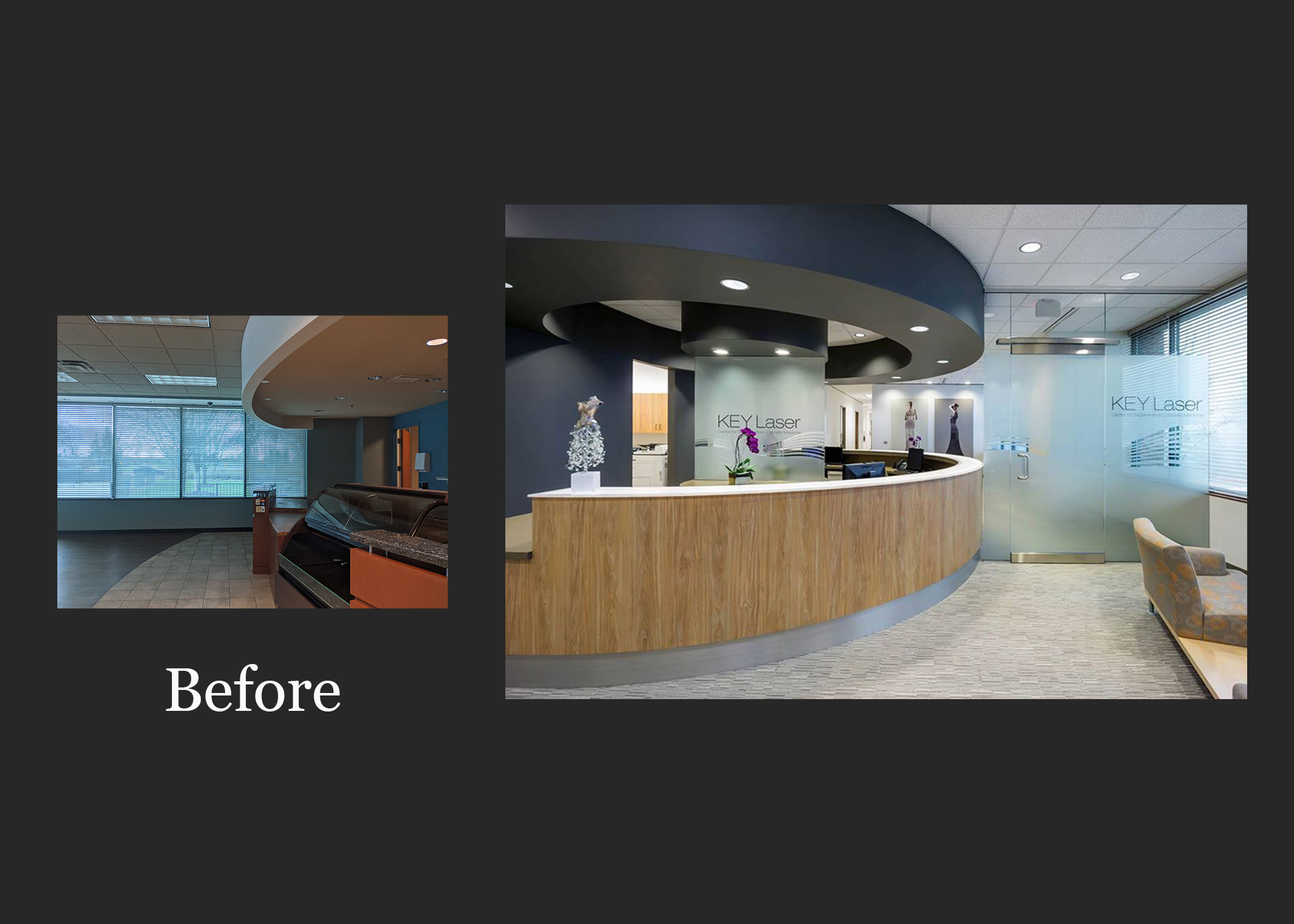
Our connection to the Peterkort Medical Office campus goes back to its beginning. Ankrom Moisan designed the original MOBs and parking garage, and that foundation has allowed us to stay closely involved as the campus has evolved over time. In partnership with Cushman & Wakefield, we’ve supported the full lifecycle of these facilities by expanding clinical services and enhancing the experience for patients, providers, and visitors.
Peterkort
From children’s clinics and internal medicine offices to outpatient care suites, elevator upgrades, lobby refreshes, and exterior canopy improvements, each project builds on the one before it. Because we know these buildings inside and out, our team can move quickly and deliver renovations that feel seamless, integrated, and forward-looking. It’s a partnership rooted in trust and long-term collaboration and a great example of how we design for the life of a building.
Renovation work is complex and requires close coordination with owners, the construction team, and consultants. At this campus it is also a cross-studio collaboration with Mariah Kiersey and Bethanne Mikkelsen working together to support these ongoing improvements over many decades.
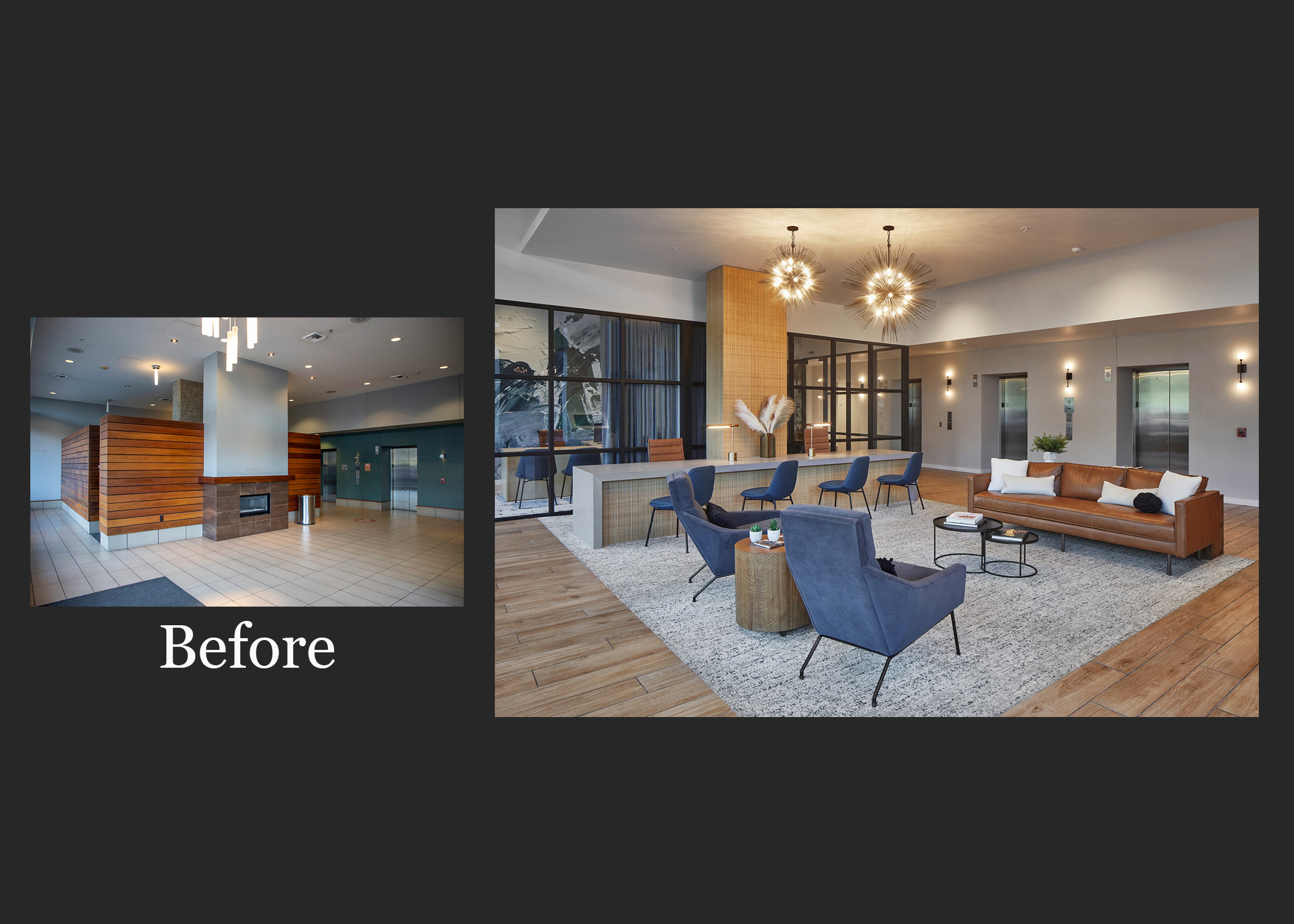
Along Portland’s South Waterfront, Griffis South Waterfront was reimagined to meet the evolving expectations of today’s residents.
Following a change in ownership, Urban Living by Ankrom Moisan returned as the original design team, utilizing competitive research and demographic insight to shape a vision aligned with Griffis Residential’s diverse resident mix of young professionals, families, and older adults.
The amenity strategy focused on adaptable, enduring spaces. New amenities were intentionally introduced, including a dedicated co-working environment, enhanced mail and package spaces, and a reimagined fitness and activity room that now extends seamlessly outdoors – expanding wellness beyond interior walls and supporting both movement and social connection.
Rather than incremental upgrades, the strategy intentionally added missing amenities – identifying underutilized square footage to expand the program, anticipate evolving resident expectations, and position the building to compete with newer developments.
By aligning experience with strategy, the renovation reinforces the building’s identity and demonstrates how insight-driven design delivers both resident value and long-term performance.
Griffis South Waterfront
Through projects like the CCC Blackburn Center, Daimler Truck North America Headquarters, Griffis South Waterfront and others across our studios, we’ve seen firsthand how thoughtfully designed buildings stay resilient and successful long after opening. As technologies, trends, and community needs shift, our renovation work helps each space grow right along with them.
Now that residents have moved into Meridian Gardens, the building will naturally evolve as their needs and programs take shape. We hope to continue partnering with Central City Concern as new opportunities for design support emerge.
Visit our Renovations Expertise page to see how we are highlighting renovation stories from all our studios and to learn how we can help your community evolve, whether we’ve partnered before or are just getting started or just curious to see what we do!
Vet Clinic Expertise
Veterinary clinics are a unique project type. Blending elements of healthcare and office projects – and even retail and hospitality – they fall somewhere between all four project types, designed for both people and pets. As such, there are some special considerations that go into accommodating staff as well as the animals that receive treatment in those projects.
Most of the vet clinics we have worked on have been first tenant improvement (TI) renovations, meaning they are located in new buildings with empty commercial space on the ground floor. To accommodate the needs of both veterinary staff and the animals they treat, these spaces are renovated to include a clear separation between the front lobby waiting area and the back-clinic rooms where pets are treated by veterinary staff.
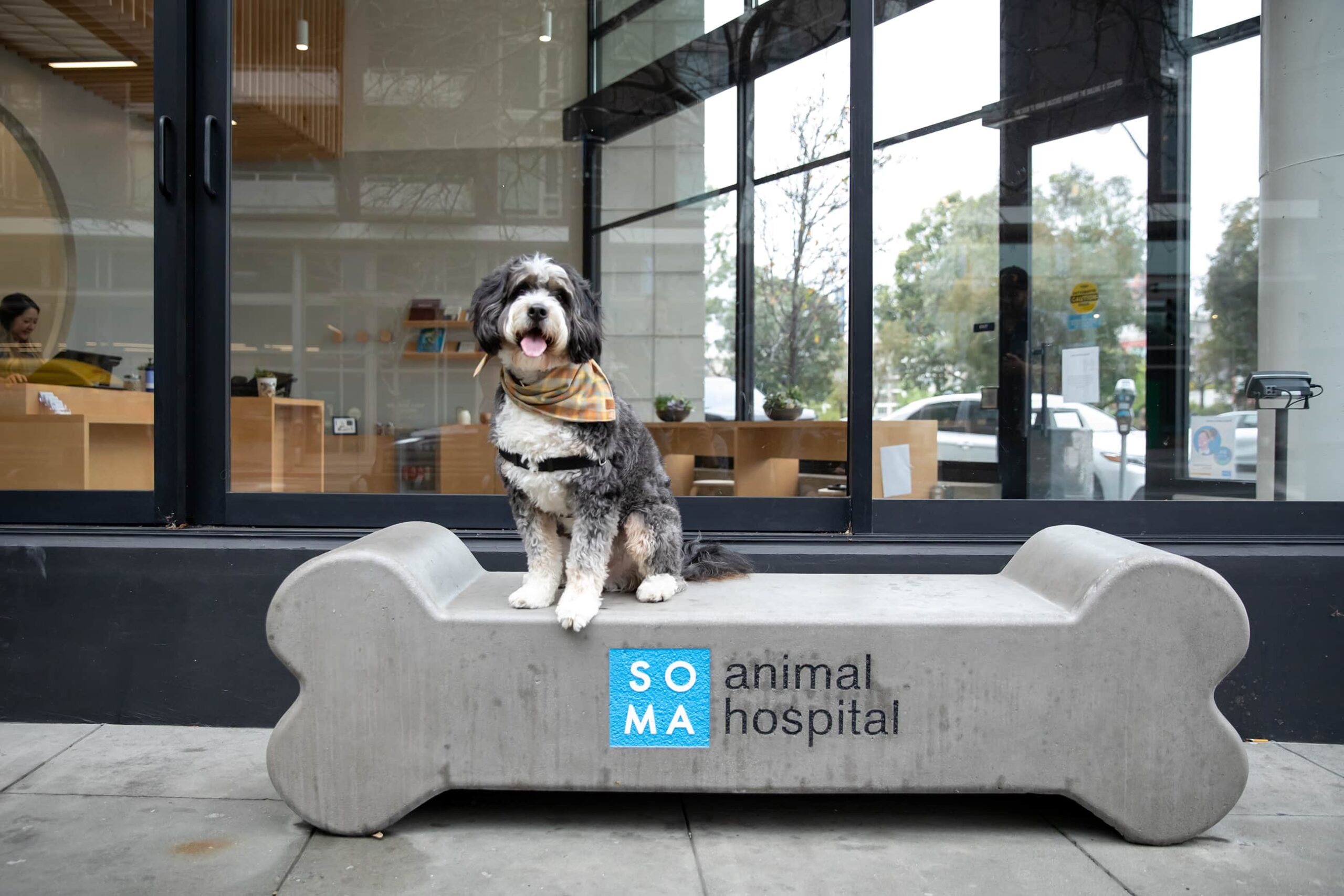
Ankrom Moisan’s veterinary work in California started with a project in the San Francisco Bay. A later project in the same area – the SOMA Animal Hospital in Mission Bay – was also the first foray into vet clinics for one of our clients.
SOMA Animal Hospital, Mission Bay
Setting the standard for all future veterinary clinic work, Mission Bay was a collaborative effort between us and our client. To ensure their flagship location effectively represented their vision for their brand, they provided 3D renderings that detailed the schematic design and layout of the interior spaces.
Considering that staff workflow is the most important part of a veterinary clinic, it was vital that we designed a smooth, easy path from the reception lobby to the exam and treatment rooms in the back, with ample additional support spaces. To effectively deliver this, the client partnered with Doctors of Veterinary Medicine, aligning on the essential needs of a vet clinic and coordinating how best to support those needs through design.
The building itself doesn’t have a typical rectangular layout. Located on the intersection of two busy thoroughfares, Mission Bay embraces the pointy corner it’s situated on, leading to a unique vantage point from outside of the building. Breaking down visual barriers in an inviting way, we used storefront glazing all around the windows to frame the interior spaces, allowing pet owners and passers-by to view the treatment rooms in the back of the clinic from the street.
Inside, we picked the finishes, paint colors, and did some of the case work detailing in the lobby, like the use of wood and the circular aperture window behind the reception desk that would become a standard in later projects with the client.
After creating Mission Bay as the flagship standard for our client, we were told that they appreciated the speed we brought the project from the planning stage to the very end of obtaining a building permit. “They liked how we handled the permitting process,” said Technical Designer Sookhee Kim. “Our prior experience with planning in the Mission Bay area made the entire process much easier for them.”
The speed and efficiency of our design process was a determining factor in completing two more similarly scoped veterinary clinics; North Hills Animal Hospital in Muirlands, and Promenade Veterinary Hospital in Long Beach.
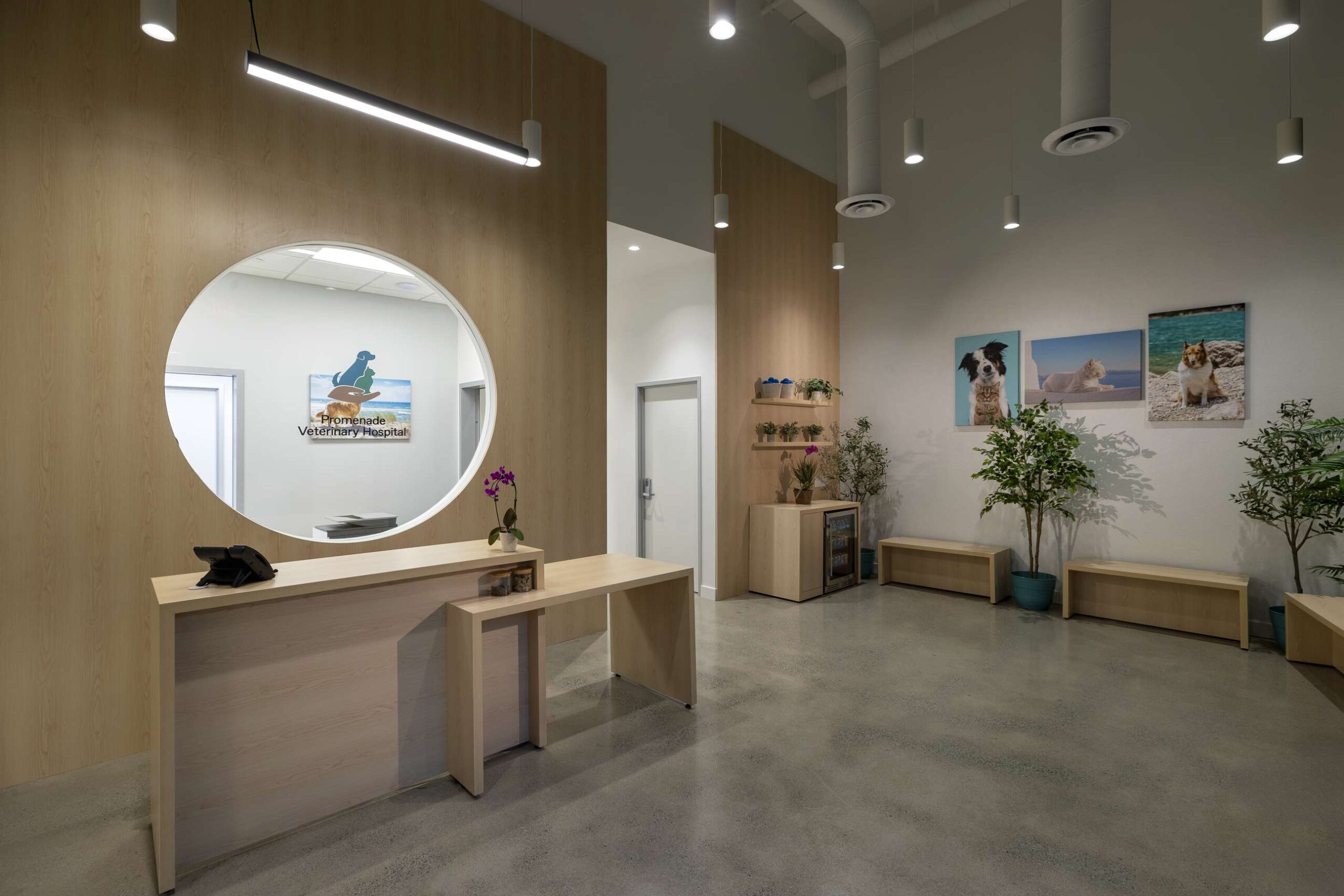
Promenade Veterinary Hospital, Long Beach
There were some interesting challenges with the Promenade Veterinary Hospital in Long Beach, stemming from the base building still wrapping up construction as we became involved. The 3,300 sq. ft. space was one of the larger TI renovations we had done for a vet clinic, so coordinating with both the client and their landlord on scope responsibility for our TI permit was a large part of the process. Navigating active permits for the base building was challenging, but getting to the other side and accomplishing our goals for the project was very rewarding.
North Hills Animal Hospital in Muirlands, on the other hand, was very straightforward, with minimal challenges or delays to the project.
The retail-like front reception desk draws clients in through a clean aesthetic and hospitality-inspired amenities, like comfortable benches and a beverage station, giving way to the back-of house staff areas where the animal patients are treated.
Lockable doors separate both client-access spaces like the reception lobby from the rest of the clinic where technical staff operate, as well as the kennels. It was important to ensure that all of the animals treated by veterinary staff stay enclosed in the kennel area should they manage to get out of their individual cages.
There is an abundance of space in the back staff area – a commitment to keeping cats and dogs separate necessitates two waiting room holding areas, as well as two exam rooms. Naturally, the one designed for dogs is larger than the one for cats.
Durable, hygienic finishes were selected to facilitate and simplify long-term maintenance, while acoustical panels were used to dampen sound from within the kennels where canine patients await treatment.
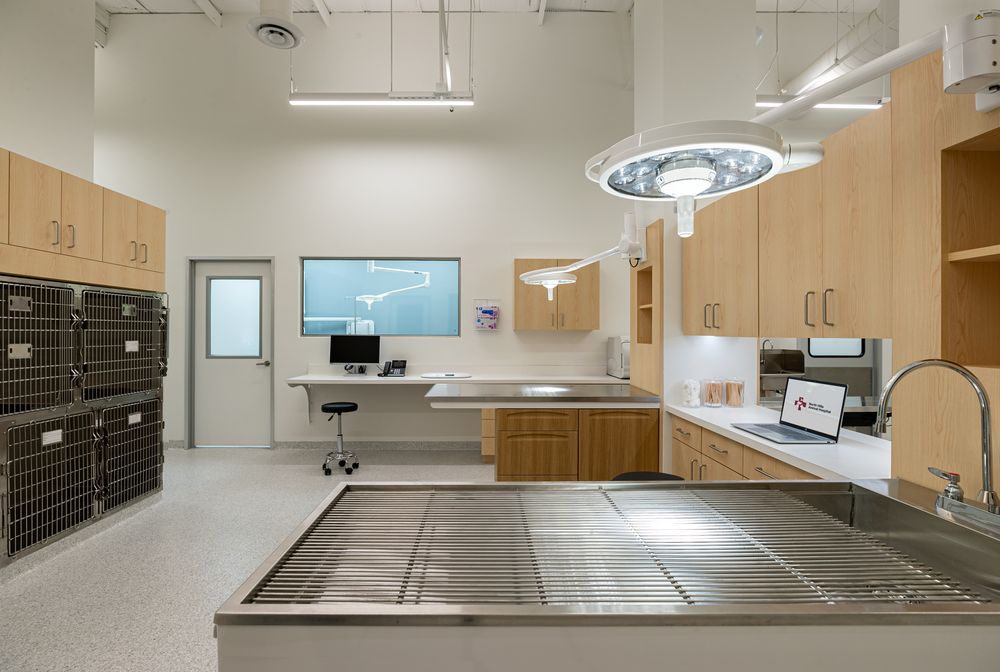
North Hills Animal Hospital in Muirlands
Since the clinic doesn’t offer overnight stays or treatment, there are about 6 exam rooms and 10 kennels for each location, allowing staff to maximize the number of pets they treat daily.
It’s an efficient, streamlined design that supports everyone involved, from the client and veterinary staff to the pets and their humans. Having perfected it early on with Mission Bay, thanks to our attentive and collaborative process, means that we are able to replicate that success in other veterinary clinics.
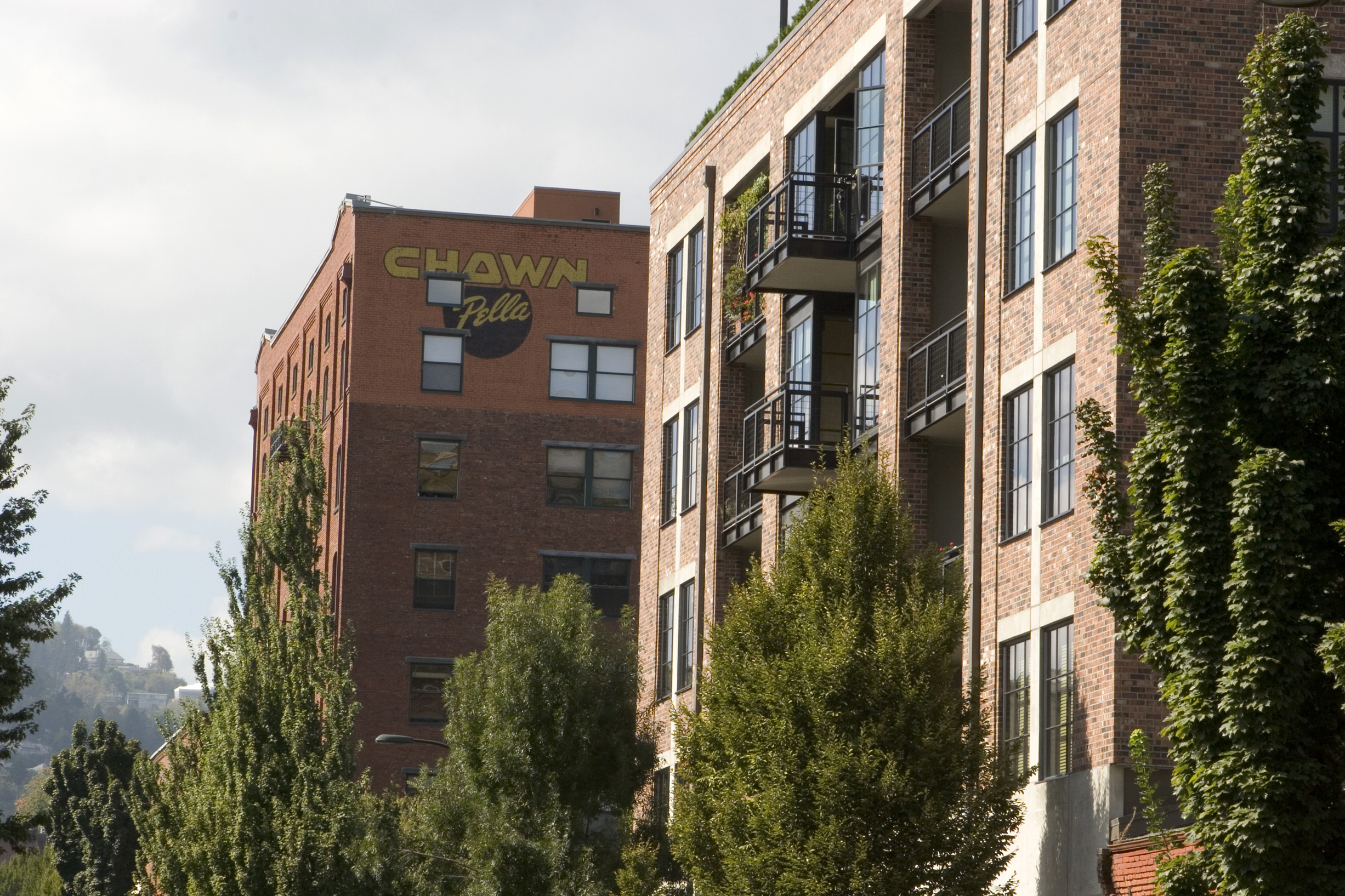
The Ins and Outs of Adaptive Reuse
What is Adaptive Reuse?
Adaptive Reuse Residential Conversions are projects that repurpose existing buildings for uses other than what the space was originally designed for.
Adaptive reuse offers developers the unique opportunity to save their investment, create and unparalleled story for end users, and make money by converting a disused or underutilized project into a one-of-a-kind residential space.
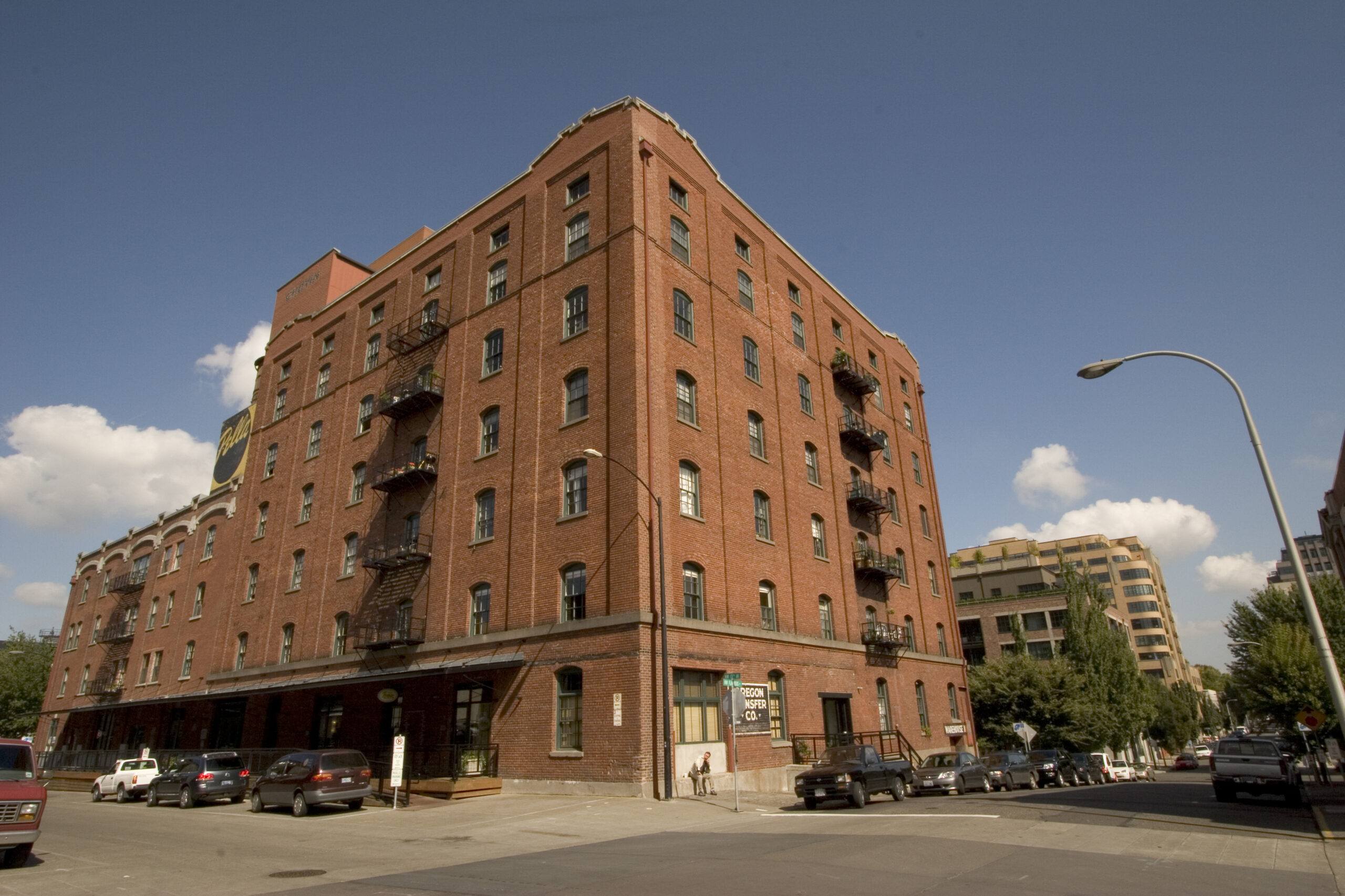
Chown Pella Lofts, an old factory warehouse converted into a multi-story residential condominium in Portland, OR’s Pearl District.
However, updating old buildings comes with layers of complexity.
Since 1994, Ankrom Moisan has been involved with adaptive reuse projects and housing conversions. The depth of our expertise means we have an intimate understanding of the limits and parameters of any given site – we know what it takes to transform an underperforming asset into a successful residential project.
Why Conversions?
There are many reasons to choose conversion over construction when considering how to revitalize old structures or adapt unused sites.
Rental Housing Demands
According to the National Association for Industrial and Office Parks (NAOIP), the United States needs to build 4.3 million more apartments by 2035 to meet the demand for rental housing. This includes 600,000 units (total) to fill the shortage from underbidding after the 2008 financial crisis. Adaptive reuse residential conversions are an affordable and effective way to create more housing and fulfill that need.
Desirable Neighborhoods
The way we see it, the success of our buildings, neighborhoods, and infrastructure is our legacy for decades to come. Areas with a diverse mix of older and newer buildings create neighborhoods with better economic performances than their more homogeneous counterparts. By preserving and protecting existing structures, conversions contribute positively to the health and desirability of the neighborhood, leading to a quicker tenant fill.
Being committed to the places we occupy, live in, and care about is another reason to embrace adaptive reuse residential conversion projects; they revive our cities. Reducing the number of buildings that sit empty in urban areas plays a major role in activating downtown districts.
Reduced Waste
Saving older, historic buildings also prevents materials from entering the waste stream and protects the tons of embodied carbon spent during the initial construction. AIA research has shown that building reuse avoids “50-75% of the embodied carbon emissions that would be generated by a new building.”
New Marketing Opportunities
Aside from these benefits to the community, adaptive reuse conversions present a way for developers to recover underutilized projects and break into top markets like affordable, market-rate, and student housing.
Construction Efficiencies
Compared to new buildings, residential conversion projects save time, money, and energy, since their designs are based on an existing structure. Adaptive reuse conversions also benefit from not having their percentage of glazing or amount of parking limited by current codes, since they’re already established.
One-of-a-Kind Design
We don’t believe in a magic formula or a linear “one-size-fits-all” approach to composition. Each site is a unique opportunity to establish a one-of-a-kind project identity that’s tied to its history and surroundings.
At the outset of any conversion, we analyze each individual site and tailor our process to align with the existing elements that make it unique. Working with what you have, our designs and deliverables – plans, units, systems narratives, pricing, and jurisdictional incentives – are custom-fit.
It’s our philosophy that you shouldn’t fight your existing structure to get a conversion made; if you can’t fix it, feature it.
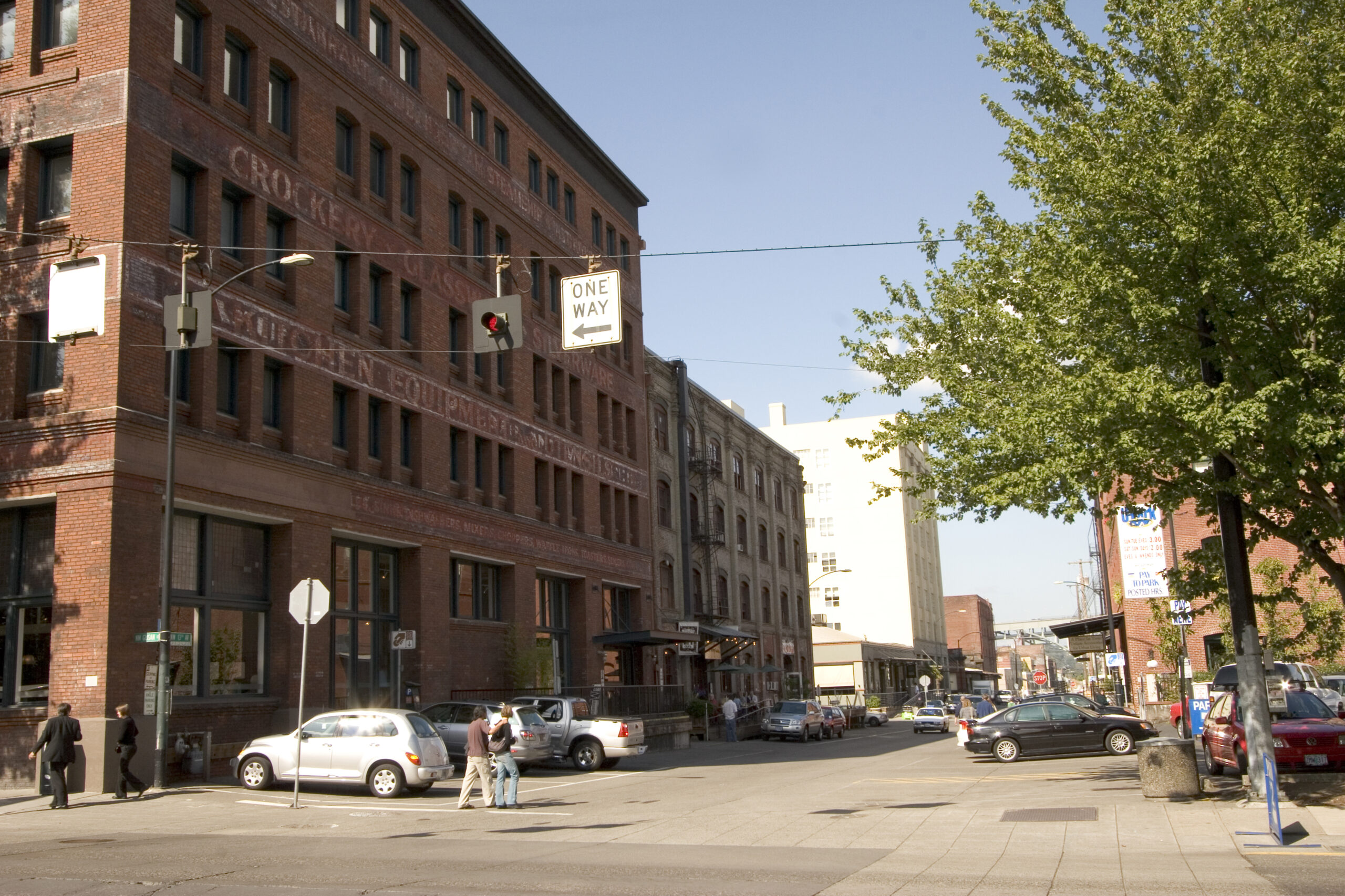
Chown Pella Lofts.
Approaching each conversion opportunity with this mindset, we analyze the factors that set a site apart, and embrace those unique elements to ensure a residential conversion stands out. With this intricate and involved process, we’ve been able to get over 30 one-of-a-kind residential conversion projects under our belt.
Through these past experiences, we have identified six key characteristics that make a project a candidate for successful conversion, and six challenges that may crop up during the renovation process. To learn more about what attributes to look out for and what traits to be weary of when considering a residential conversion, read about our “Rule of Six” here.


By Jennifer Sobieraj Sanin, Design Director of Housing and Senior Principal, and Jack Cochran, Marketing Coordinator.
Residential Conversion Case Study
Converted from a Holiday Inn hotel to a residential apartment complex, 728 16th St. embraces its midcentury hotel past while providing a new take on residential housing. By utilizing strategic efficiencies within the renovation process, Ankrom Moisan’s adaptive reuse and renovations design team contained costs, expedited construction, and completed the project in a sustainable fashion.
The Challenge
Originally constructed in the 1970s, the site of 728 16th St. had seen better days. Years of water damage to the roof and walls meant the building’s enclosure needed updating. Additionally, because the structure was originally designed for traveling guests, rather than as permanent lodging, many of the rooms lacked the necessary amenities for residential living, such as kitchen appliances and other utilities like washers and dryers.
Adding these appliances to the space uncovered unique challenges around the inclusion of proper ducts and plumbing for those utilities.
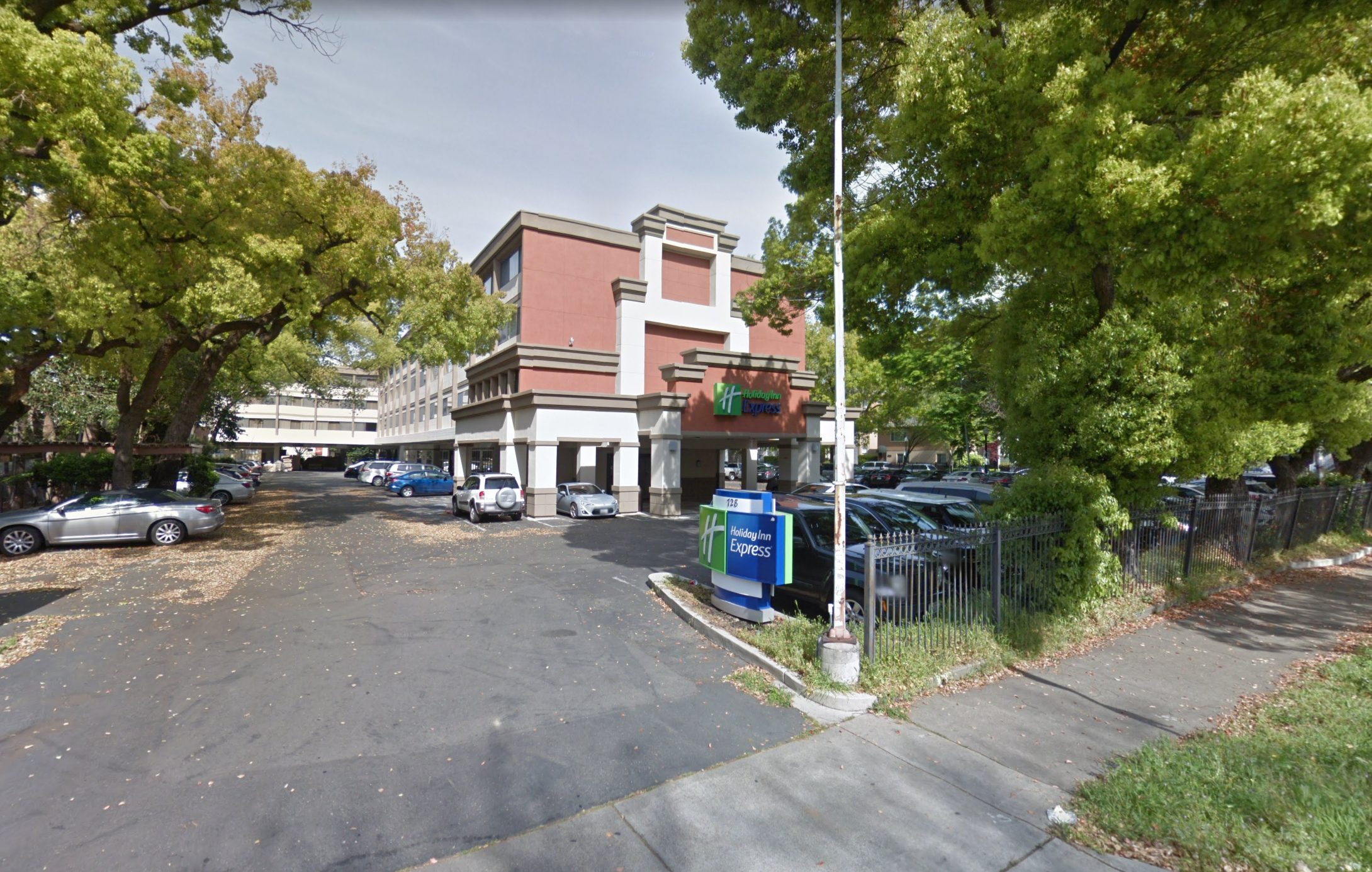
Before: 728 16th St. as a Holiday Inn
The Solution
Leveraging as much of the pre-existing space as possible resulted in the renovated 728 16th St. building’s unified design. Existing structure, utilities, and MEP infrastructure were optimized by the design team to maximize efficiencies and eliminate the need for a complete tear down. In this sense, the name of the game was understanding the parameters of the site and knowing how to work within those parameters to bring the design intent for the new building type to life.
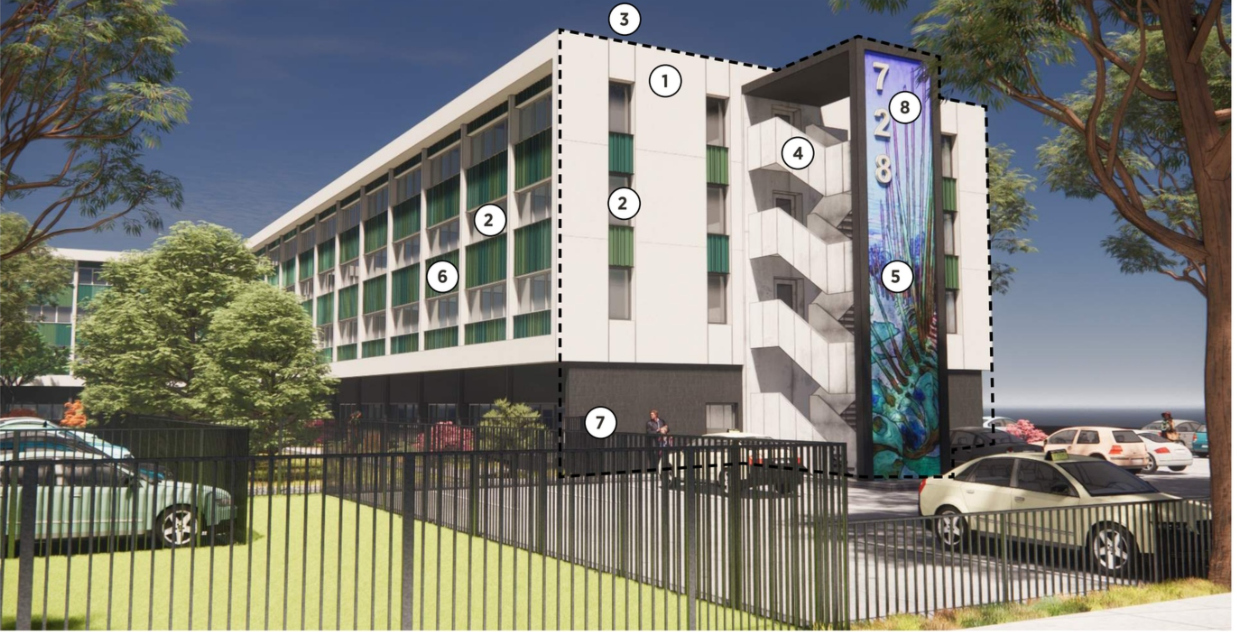
Since the building’s enclosure was updated during the renovation, the design team was given the opportunity to reskin the building with a high performance rain screen system during the update, preventing any further water damage to the structure. This also allowed the team to shift the site’s layout and the location of amenities; the lobby itself was relocated, moved to a more central location of the site.
To increase the total number of units, portions of the existing hotel, such as the parking lot and food service kitchen were infilled and connected to the new lobby. Other existing hotel rooms were combined to create one or two-bedroom apartment units, with an emphasis on maintaining the pre-established bathroom layouts, since they contained plumbing fixtures and pipes that would be too difficult to relocate.
During: A rendering showing what 728 16th St. might look like as a residential housing complex.
Addressing the challenges that were uncovered by the lack of plumbing, pipes, and appliance ducts in the individual new and existing units, the renovations team made large-scale adjustments to the height of the ceilings, to accommodate those appliance ducts and plumbing pipes.
The Impact
By maintaining as much of the original structure as possible and eliminating the need for a tear down, 728 16th St.’s renovation created an expedited development process that ended up being more sustainable than a new build.
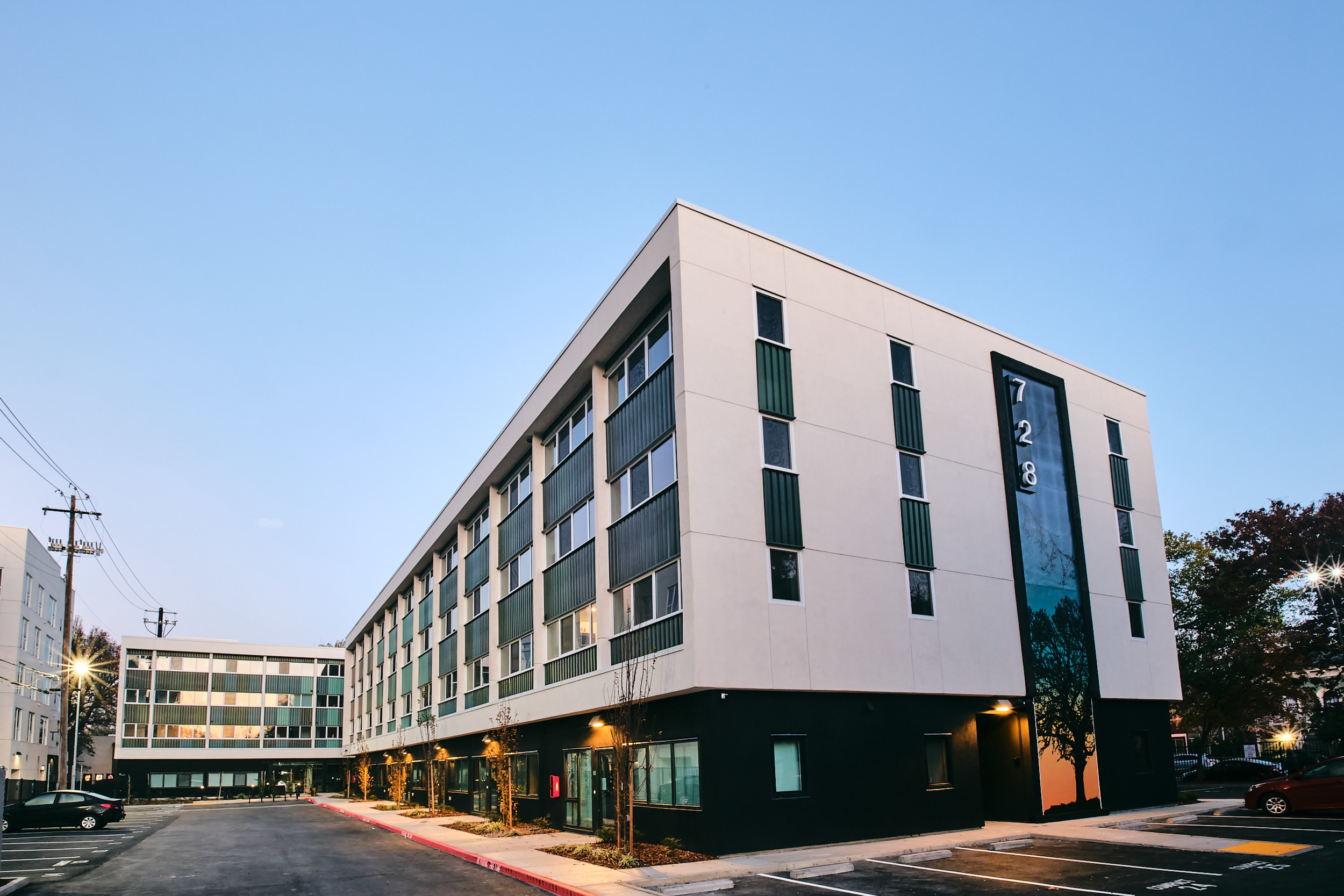
After: 728 16th St., converted from a Holiday Inn hotel to residential housing.
Embracing the existing structure, room layouts, and utilities of the Holiday Inn, Ankrom Moisan’s renovations team turned the underutilized hotel space into an affordable-by-design residential project in a desirable area. Shifting the layout and positioning of the site itself allowed 129 new units to be built, both increasing the amount of available housing in the area and diversifying the unit types within 728 16th St., as the original design was repetitive.
The fresh perspective on modern residential housing brought to life by the Ankrom Moisan adaptive reuse conversion team sets 728 16th St. apart as a place that remains competitive in new markets.
Overall, the building type conversion for this project was successful because the site exhibited at least two of the six key characteristics for effective renovations, otherwise known as the “Rule of Six.” Being situated in a walkable location and having at least a 12,000 square foot plate set 728 16th St. up for success, but a prospective adaptive reuse conversion truly only needs one of the six key characteristics to be a qualified candidate for successful conversion. Read more about the Rule of Six and how to tell if your site would make for a successful residential conversion here.
For guidance through the adaptive reuse process, contact Jennifer Sobieraj Sanin, Housing Studio Design Director and residential conversion expert.
By Jennifer Sobieraj Sanin, Housing Studio Design Director.
Contact: +1 (206)-576-1600 | jennifers@ankrommoisan.com
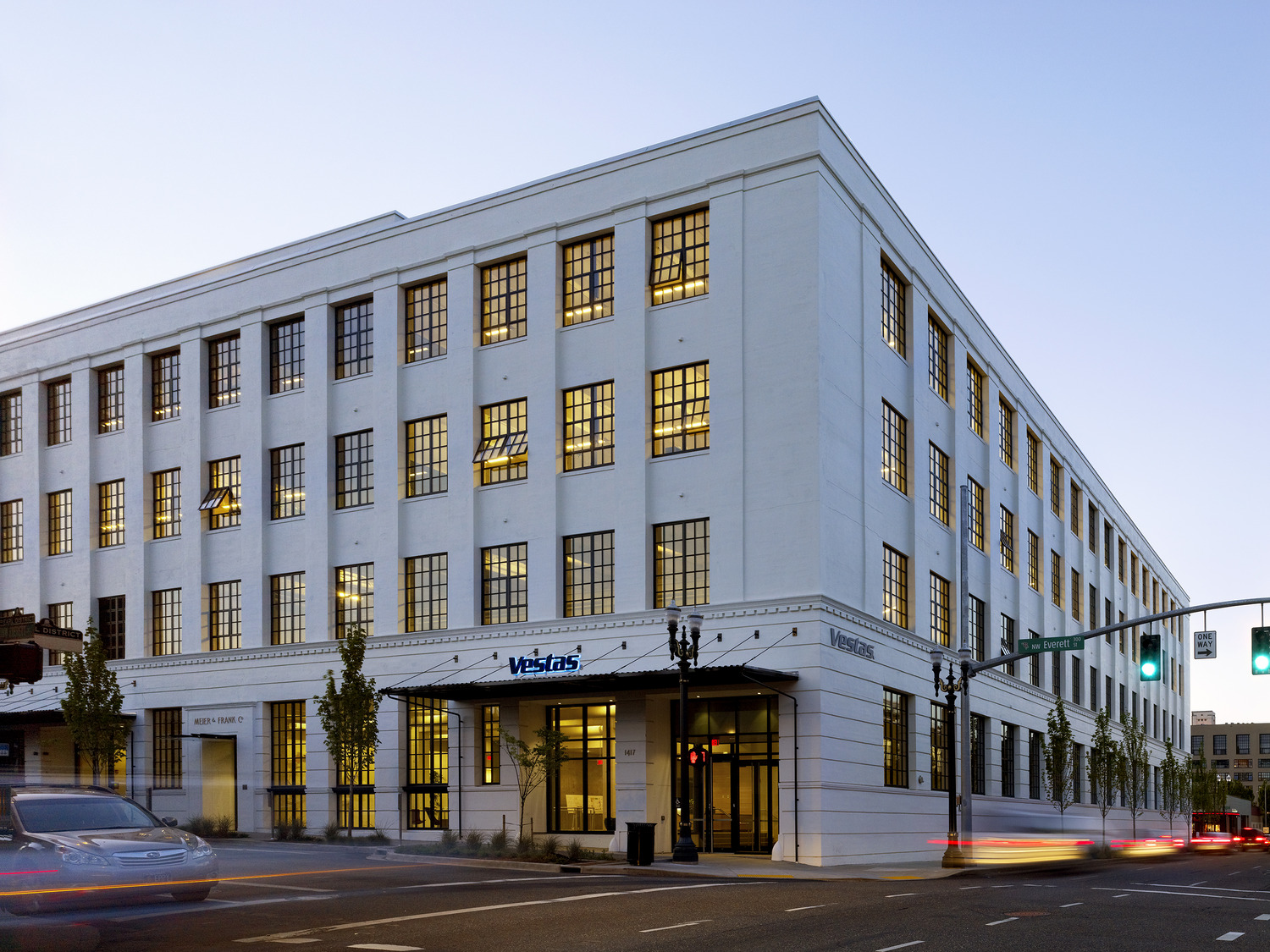
Should Your Building Become Housing? Critical Considerations for Adaptive Reuse
It’s the question on every developer’s mind right now. Is adaptive reuse feasible for my building? Cost-effective? What will a housing conversion project entail?
Since 1994, Ankrom Moisan has been involved with adaptive reuse projects and housing conversions. The depth of our expertise means we have an intimate understanding of the limits and parameters of any given site – we know what it takes to transform an underperforming asset into a successful residential project.
For customized guidance through the adaptive reuse evaluation process, contact Jennifer Sobieraj Sanin, Housing Studio Design Director and residential conversion expert.
The Rule of Six
While there is no magic formula or linear ‘one-size-fits-all’ approach to conversions, we have a framework that should be considered when approaching an adaptive reuse project. We call it “The Rule of Six.”
The Rule of Six outlines six key characteristics that make a project a candidate for successful conversion, and six challenges to be prepared for during the renovation process.
With this informed process, we’ve been able to get over 30 one-of-a-kind residential conversion projects under our belt.
The Six Key Characteristics for a Successful Conversion
Not every building is a good candidate for conversion. By evaluating multiple structure types and working closely with contractors on successful projects, we’ve identified six key characteristics that lead to the creation of successful, low-cost, conversions.
If a property has any of these traits – whether it’s one characteristic of all six – it might qualify as a candidate for a successful conversion.
- Class B or C Office
- 5-6 Levels, or 240′ Tall
- Envelope Operable Windows Preferred
- Walkable Location
- 12,000 Sq. Ft. Plate Minimum
- Depth to Core Not to Exceed 45′
To find out if a property makes for a good adaptive reuse project, consider conducting a feasibility study on the site.
Reach out to get started on your feasibility study today.
The Six Challenges to be Prepared For
West Coast conversions can be particularly challenging with their seismic requirements, energy codes, and jurisdictional challenges – your conversion team should be prepared for these hurdles. The solutions vary by project; contact us to see how we can solve your project’s challenges.
- Change of Use: It’s the reason we upgrade everything. The simple act of changing a building’s use from office to residential immediately triggers a ‘substantial alteration.’ This label starts all the other necessary upgrades.
- Seismic-structural Upgrades: Buildings on the West Coast must meet a certain code level to be deemed acceptable for the health, safety, and welfare of end-users. Often, this required level does not match the current code, meaning negotiations with the jurisdiction are necessary.
- Egress Stairs: Stair width is usually within the code demands for conversion candidates, but placement is what we need to evaluate. When converting to residential, it’s sometimes necessary to add a stair to the end of a corridor.
- Envelope Upgrades and Operable Windows: West Coast energy codes require negotiated upgrades with jurisdictions, as existing envelopes usually don’t meet the current codes’ energy and performance standards. Operable windows are a separate consideration. They are not needed for fresh air but are often desired by residents for their comfort.
- Systems and Services Upgrades: These upgrades often deal with mechanical and plumbing – checking main lines and infrastructure, decentralizing the system, and adding additional plumbing fixtures throughout the building to support residential housing uses.
- Rents and Financials: Determining how to compete with new build residential offerings is huge. At present, conversions cost about as much as a new build. Our job is to solve this dilemma through efficient and thoughtful design, but we need development partners to be on the same page as us, knowing where to focus to make it work.
At the outset of any conversion, we analyze each individual site and tailor our process to align with the existing elements that make it unique. Working with what you have, our designs and deliverables – plans, units, systems narratives, pricing, and jurisdictional incentives – are custom-fit.
To better understand if adaptive reuse is right for your building, get in touch with us. We can guide you through the feasibility study process.
To see how we’ve successfully converted other buildings into housing, take a look at our ‘retro residential conversion’ case study.
By Jennifer Sobieraj Sanin, Housing Studio Design Director.
Contact: +1 (206)-576-1600 | jennifers@ankrommoisan.com
Senior Community Architecture and Interior Design
TABLE OF CONTENTS
Studio Overview
Geographic Markets
Studio Leadership
Thought Leadership + Case Studies
Studio Overview
Uplifting the experience of aging.
We create purposeful and sensitive environments built around living, human connection, lifestyle, and health; Welcoming places designed to support the entire spectrum of aging. We balance the visions of our partners with the needs of their residents to create a future where age-friendly environments are the baseline, and design removes barriers to aging above all else. Our highest ambition is finding collaborative solutions to create homes where people want to live, restaurants they want to eat at, and communities where they want to be.
Geographic Markets
Ankrom Moisan’s Senior Communities Studio and expertise operates from offices across the West Coast and Texas. While we are headquartered in Portland, Oregon, we have offices located in Seattle, Washington; San Francisco, California; and Austin, Texas. However, our Senior Community work extends into markets across the country.
Studio Leaders
Ryan Miyahira, Senior Communities Studio Co-Director, brings over 28 years of experience designing thoughtful, people-first environments that support aging with dignity and connection. Known for his steady leadership and deep commitment to client goals, Ryan helps create vibrant senior communities that are beautiful, functional, and deeply rooted in place. Darla Esnard, Senior Communities Studio Co-Director, also designs spaces and experiences that enhance everyday life, creating lasting client relationships alongside places of beauty. Her experience spans over 30 years of design, and her focus on senior housing means a project done well for the residents, the client, and the community.
Thought Leadership + Case Studies
Strategic Renovations for Aging Senior Communities
By leveraging Ankrom Moisan’s Senior Community Studio’s experience in repositioning and expanding existing Senior Living campuses, developers can take a phased, long-term approach to revitalizing aging senior communities while balancing the needs of current and future residents. With deep experience in senior community renovations, we specialize in seeing beyond existing limitations to reimagine and transform senior living spaces. Our team brings long-term vision to every project scale – whether refreshing interiors through strategic FF&E upgrades or repositioning an entire community.
Repositioning & Renovating Communities: Living Your Potential
Re-imagine your community expanding services and amenities for the current and next generation. For the active adult, those needing personal care services, and those that need specialized care, we design to Empower, Enrich, and Care.
Get to Know the Senior Communities Renovation Team
Designing renovations for senior communities is no easy feat. While this project type comes with a unique set of challenges, when done well it has a big impact on the quality of residents’ lives. Ankrom Moisan’s Senior Renovations Team knows this well. In this Q&A they explain what makes these projects special and what inspires them to do this work.
Designing Beyond Necessity
[Highlight the shift from “need-based” to “want-based” senior living and explore how high-end amenities, wellness-focused design, and hospitality-driven spaces are reshaping the industry and attracting residents earlier in their retirement journey.]
When it comes to dining, seniors’ tastes are evolving, which is impacting how senior living communities plan and design food and beverage amenities. Gone are the days of one large formal dining room – today’s seniors want variety and choice in both their dining venues and types of cuisine. Designing senior living facilities to incorporate flexible food and beverage spaces, balancing accessibility and aesthetics, and design elements that promote socialization is increasingly important.
Rest and Relaxation: Designing for Comfort
Senior communities should be comfortable, should rejuvenate, and can make or break the capacity for resiliency. Designing for the comfort of seniors goes far beyond material or FF&E decisions to include communal space, biophilic design, sensitivity to place and culture and history, even flexible spaces that adapt to fit each residents’ individual conceptions of home and relaxation.
Looking Ahead: The Post-COVID Landscape for Senior Housing
Ankrom Moisan’s Jeremy Southerland, Alissa Brandt, and Chris Ebert led a presentation at the 2021 LeadingAge California Virtual Conference to discuss the research and insights our team has uncovered that will have the biggest impacts on senior housing development in 2021 and beyond. Even though the demand continues, new things to pay attention to include affordability as well as a leap forward in technology, ultimately impacting community wellness. Traditional models of retirement housing will no longer meet the market’s needs, and senior housing developers and communities will need to adapt to a rapidly changing world. In the future, senior communities will look for more ways to incorporate wellness into the entire design of a project, create flexible layouts, and use the latest in technology to provide an environment that helps seniors age in place, comfortably.
Wellness and Active Adult Communities
[description: Discuss how wellness-focused design is becoming essential in senior living with an emphasis on active adult communities that promote mental physical, and social well-being. Highlight the integration of wellness features in both new developments and renovations.]
Wellness relies on constant attention with periodic adaptations. We design for wellness by finding opportunities to adapt while maintaining physical infrastructure, operations, and marketing.
We take a holistic approach that focuses on longevity, sustainability, and lasting relevance to create environments that transcend aesthetics. Rather than simply designing spaces for the present, we curate lasting experiences that prioritize resident well-being and craft quality interiors that have an enduring, timeless appeal.
Creating Active Environments within Senior Living Communities
Creating senior living communities with more ‘active adult’ opportunities for residents to engage in is a smart and viable option for many communities. This design concept helps motivate seniors to become more independent and active, encourages socialization among residents, and offers conveniences to staff members at facilities with ongoing staff shortages.
Vitality in the Village: Mary’s Woods
Understanding the connection between a well-designed community and people’s overall resilience and health, our campus master plan for The Village at Mary’s Woods encourages residents to socialize with each other in a large-scale, pedestrian-centered village environment.
Movement and Play: Fitness is Integral to Wellness
The connections between exercise and overall wellbeing are well-stablished. As the designers of senior communities, we have the chance to create senior communities that encourage healthy movement for people of all physical abilities by designing fitness into the everyday lives of residents.
Fresh Air: Approaching Air Quality Holistically
Fresh air and wellness are intrinsically connected. With ready access to fresh air, people are more alert, physically healthier, able to heal quicker, happier, and more relaxed. And indoors, constantly refreshed air is far safer than stale or poorly filtered air. Our insights explore how designing for fresh air is part of designing for resiliency in senior communities.
How Lighting Can Influence Resident Health and Wellness in Senior Care Settings
Lighting plays an important role in a building’s architecture, as it can enhance a space, create an aesthetic, and draw attention to different elements. But in senior care settings, lighting plays an even bigger role. When used strategically, lighting can influence resident health and wellness, as well as safety.
Balancing Elements of Design with Light in Mind
With access to natural daylight, we’re sharper and happier during the day, we sleep better at night, and we recover faster when we’re sick. To properly daylight indoor spaces, designers must balance glazing, climate, solar and thermal gain, external views, nighttime darkness, and many more independent factors – far more than simply adding extra windows.
Holden of Bellevue: Connected Senior Living
A growing trend in senior community design brings senior living back into urban centers from the suburbs while adding public programming to planning that – until recently – was exclusively private. Our design for Holden of Bellevue, which has received an INaward from the IIDA Northern Pacific Chapter for its community-focused design, focuses squarely on this priority. Every material, detail, and layout was intentionally crafted to foster community by connecting residents to each other, to their families, and to their city.
Intergenerational Communities
[description: We have firsthand knowledge and expertise in delivering these types of communities. Lots of industry and development interest and chatter around this topic. Mirabella ASU, Southern Oregon RFP, Higher Ed clients more interested in this area]
Designing the Next Generation of University-Based Retirement Communities
University-Based Retirement Communities (UBRCs) are redefining what it means to age well by bringing together students, faculty, and older adults in vibrant, intergenerational settings centered on learning, wellness, and purpose. Projects like Mirabella at Arizona State University (ASU) have already proven how powerful this model can be, where residents live steps from classrooms, share campus amenities, and engage in daily university life.
As household structures change and adapt, the trend toward multigenerational living has gained significant traction. This shift is driven by a combination of demographic changes, economic challenges, and shifting consumer preferences, according to the Urban Land Institute (ULI). For senior housing developers and architects, this presents a question – How can living environments accommodate the diverse needs of multigenerational households while enhancing the quality of life for older adults?